

Creating Healing Spaces at Selah Fellowship
Healing doesn’t always arrive the way we expect it to. Sometimes it comes quietly through color, through creativity, through the simple act of being given space to feel. This is a story about one of those moments, and what a room full of grieving children taught us about the power of a safe space.
Sometimes, the simplest moments hold the deepest wisdom.
A healing space doesn’t have to look like a therapist’s office. It doesn’t require the right credentials on the wall or the perfect words spoken at the perfect moment. Sometimes, it looks like a circle of children sitting cross-legged on the floor, holding paintbrushes, deciding how to remember someone they loved.
A few summers ago, we held a camp for grieving children boys and girls who had each lost a parent or a loved one within the past year or two. They came carrying something that most adults don’t know how to hold, let alone a child. Grief that hadn’t fully found its shape yet. Love that had nowhere left to go.
We wanted to give it somewhere to go.
We gave each child a plain white pillowcase and paints, and we asked them to decorate it however they liked. However they felt. No rules, no wrong answers. Just their hands, their colors, and whatever was living inside them that day. The room got quiet in the way rooms only get quiet when something real is happening.
Then came the part that changed everything
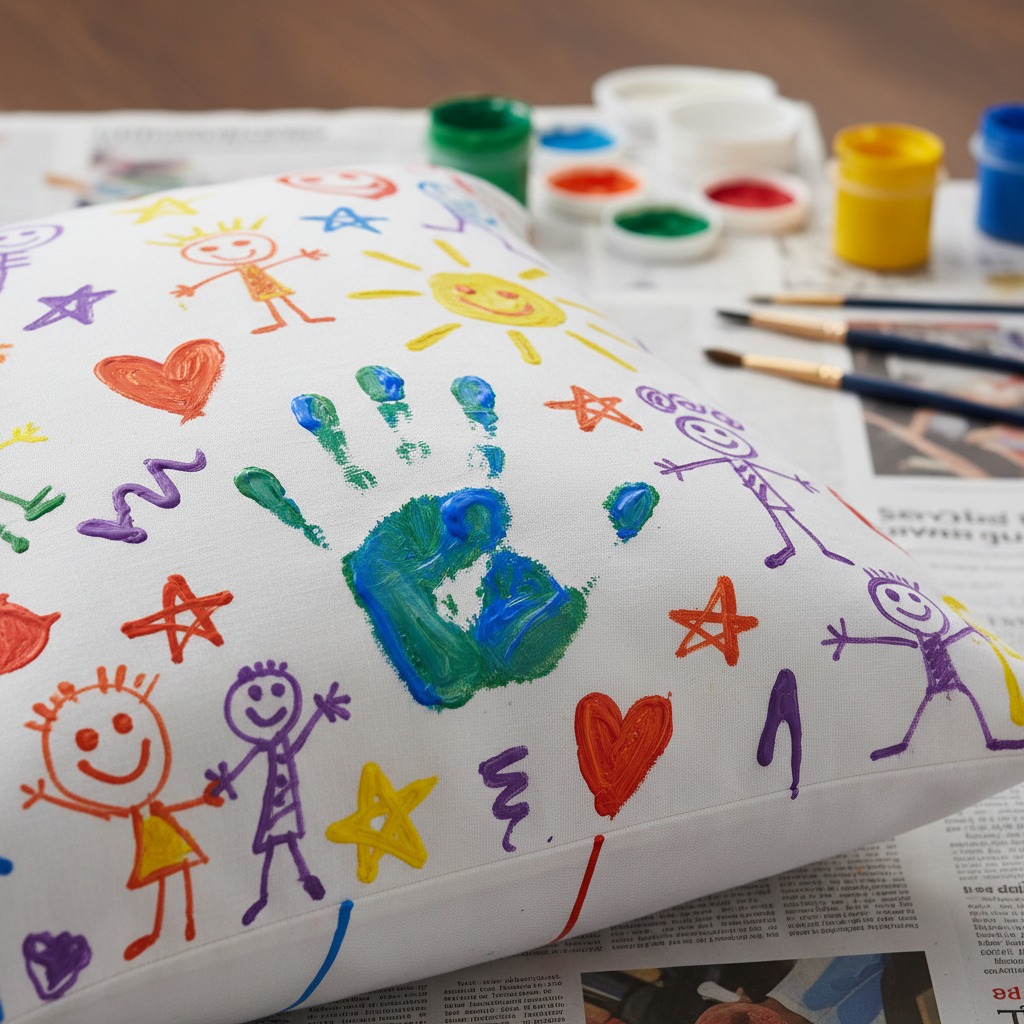

Once the pillowcases dried, we brought out bags of stuffing but not ordinary stuffing. Each color meant something. Red was for love. Yellow was for joy, for all the happy memories. Purple was for the missing, the ache of absence. White was for peace. Green was for hope the kind that feels fragile but refuses to leave.
We asked each child to fill their pillow with the emotions their person brought out in them. To stuff it full of what they felt and what they still feel.
What happened next is something I will carry with me for the rest of my life. Children who had barely spoken all week began to talk. Not because we asked them to, but because the activity had opened a door that words alone couldn’t unlock. They held up handfuls of red stuffing and said things like “this is how much she loved me.” They added purple and said “I still miss him every single day.” Some pillows were bursting with color. Some were quieter, more careful. Every single one was true.
And the adults in the room volunteers, facilitators, parents were not untouched. More than one person stepped quietly to the side to collect themselves. Grief, it turns out, doesn’t check ages at the door.
That is what a healing space is. It is not a program or a curriculum. It is a moment of safety so carefully constructed that something buried finally feels free to surface. It is the understanding that healing rarely announces itself, it sneaks in through paint and color and the simple act of being allowed to feel points, maintaining momentum as you steer the discussion to its final stages.
Those children went home that night with something soft to hold. Something they made with their own hands, filled with their own love. A pillow that said: what you feel is real, what you lost mattered, and you are not alone in carrying it.
That is the simplest wisdom we know. And it is, we believe, enough.
“Unplanted seeds never bloom.” Chap. Charlene F Wright, BCCe


